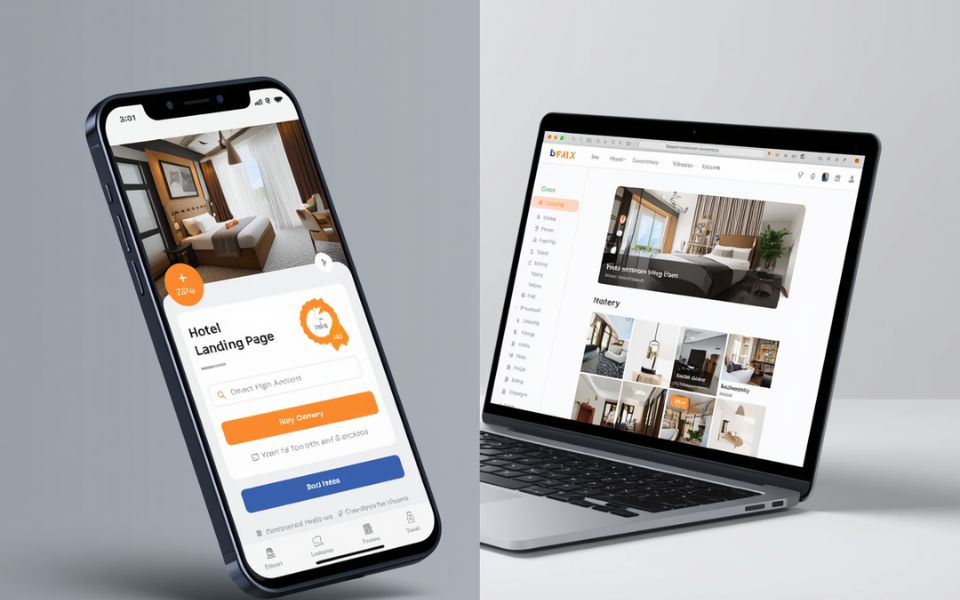
Many hotels feel they have a website, but direct bookings remain minimal. They have traffic. Instagram is active. Ads are also running. But inquiries and reservations still come in mostly through OTAs. When this happens, the problem is often not traffic, but rather the website structure itself. This is because a regular hotel website and a landing page actually have different functions. Unfortunately, many properties still mix the two without a clear strategy.
Hotel Websites and Landing Pages Are Not the Same
Simply put, a hotel website is created to provide comprehensive information about the property. Meanwhile, a landing page is created with one specific goal: conversion. This conversion usually takes the form of a booking, WhatsApp inquiry, lead form, or direct reservation. Therefore, the approaches to the two are quite different.
Hotel Websites Are Usually More Comprehensive
Hotel websites generally contain many pages, such as:
- homepage
- room details
- gallery
- restaurant
- spa
- blog
- contact page
- and hotel amenities.
The goal is to provide a complete overview of the property. And this is important. Because websites also help: hotel branding, Google SEO, increase trust, and strengthen online presence. Especially for hotels looking to build long-term direct bookings. The problem is, hotel websites are often too "crowded." Too many menus. Too much information. The CTA isn't clear. Ultimately, visitors arrive, scroll for a while, and then leave without taking any action.
Landing Pages Focus Not on Information, But on Conversion
Landing pages are simpler and more focused. They are usually created specifically for a single campaign or specific objective. For example: a honeymoon package promotion, a long stay package, a wedding venue, or a specific special offer. Because the focus is on conversion, landing pages typically: have minimal distractions, CTA is clearer, visually more focused, copywriting is more persuasive, and the visitor journey is shorter. So when people land from an ad, they are immediately directed to the desired action, not made to explore too many pages first.
Mistake: Many Hotels Still Direct Ads to the Homepage
This is a fairly common mistake. Homepages are often too general. For example, an ad mentions a "Romantic Honeymoon Villa in Ubud," but after clicking, it takes you to a homepage filled with a jumble of room types and amenities. Ultimately, the campaign message becomes disconnected. A good landing page should continue the expectation of the ad. If the ad is about a honeymoon, the subsequent page should also focus on the honeymoon experience, not turn into a corporate profile of the hotel. So, Which is More Important?
The answer depends on the hotel's marketing goals. If you want to build a long-term brand and SEO, a website is still essential. But if you want to increase conversions from a specific campaign, a landing page is usually much more effective. This is especially true for hotels that are starting to seriously increase direct bookings and reduce their reliance on OTAs. Ultimately, traffic without conversions will still not generate revenue.
If your hotel wants to start increasing direct bookings, optimize the performance of Meta Ads and Google Ads, or create a more conversion-focused landing page, the ecommerceloka team is ready to help tailor a digital strategy to your property's needs.