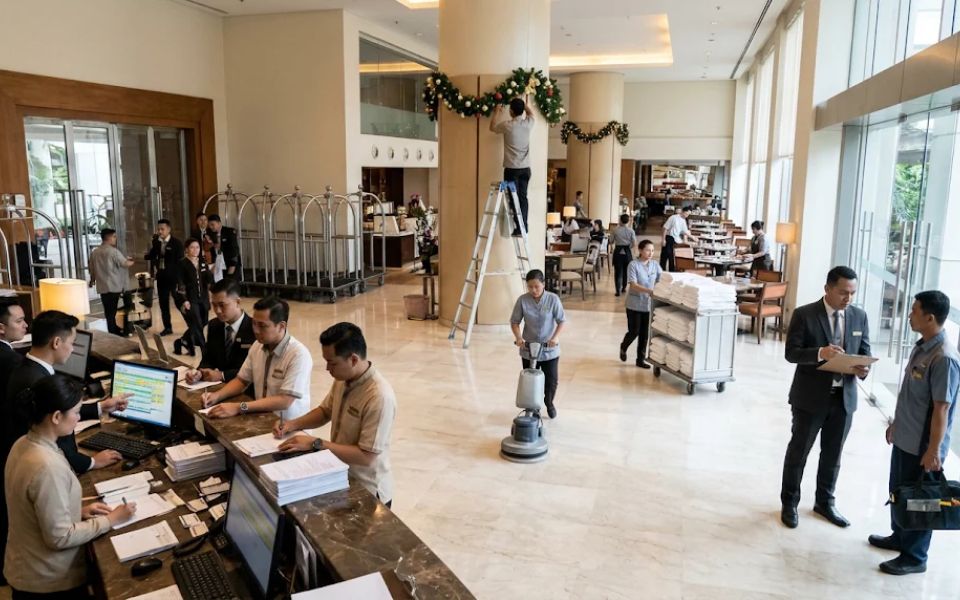
The year-end period is one of the most important times for the hospitality industry. Christmas and New Year holidays typically increase accommodation demand in many tourist destinations, including Bali. However, high demand does not automatically guarantee optimal hotel revenue. Inadequate preparation can lead to room availability issues, pricing errors, and a less satisfying guest experience.
For this reason, hotels need to prepare their strategies well before the high season begins. From evaluating reservation performance and setting room rates to managing OTA inventory and preparing hotel operations, every aspect should be reviewed to ensure the business can operate more effectively. Here is a checklist to help hotels prepare for the high season before the end of the year.
1. Evaluate Reservation Performance and Previous-Year Data
The first step is to understand the hotel's performance during the same period in the previous year. Historical data can help management identify demand patterns and develop more realistic strategies. Some key metrics to review include:
- Occupancy rate: The percentage of available rooms that are sold.
- Average Daily Rate (ADR): The average room revenue generated per occupied room night.
- Revenue per Available Room (RevPAR): Room revenue compared with the total number of available rooms.
- Booking pace: The rate at which reservations are being made for upcoming stay dates compared with a previous or benchmark period.
In addition to reviewing the previous year's results, check when reservations started to increase, which dates experienced the highest demand, and which booking sources generated the largest contribution.
Use this data as a basis for decision-making rather than as an absolute benchmark. Market conditions, competitor pricing, and traveler behavior can change from year to year.
2. Develop a Hotel Strategy for Pricing and Room Availability
Setting room rates for high season is not simply about increasing prices across the board. Hotels need a hotel strategy that considers demand, booking levels, competitor rates, and the characteristics of each stay date.
For example, demand for New Year's Eve may differ significantly from the first week of December. Therefore, room rates and availability should be evaluated based on individual dates rather than applying a single rate throughout the entire holiday period.
Before high season, consider the following:
- Review room rates based on room type and stay date.
- Compare competitor rates while considering similar facilities and locations.
- Determine when promotions are necessary and when rates can be maintained.
- Consider minimum length-of-stay restrictions if they align with demand patterns.
- Monitor changes in booking pace to identify dates that require adjustments.
Avoid excessive discounts simply to increase occupancy. Rooms sold at rates that are too low may not generate optimal revenue after distribution commissions and operating costs are taken into account.
3. Audit Your Hotel Listings on OTAs
Online Travel Agents (OTAs) such as Booking.com and Agoda are often important channels for reaching travelers searching for accommodation. Before high season, make sure the property information on each channel is accurate and consistent.
The checklist should include:
- Room and facility photos are still relevant to the current property condition.
- Property descriptions, facilities, and hotel policies have been updated.
- Room types, guest capacity, and amenities match the products being sold.
- Rates, taxes, and cancellation policies are clearly displayed.
- Room availability calendars match the actual inventory.
Also check whether any old promotions are still active or whether existing rate conditions need to be updated. Accurate information helps potential guests understand what the hotel offers while reducing the risk of misunderstandings after a reservation has been made.
4. Make Sure Your Hotel Website and Ecommerce System Are Working Properly
A hotel website is an important touchpoint in the guest journey, especially when potential guests are looking for information or making direct reservations. In the context of hotel ecommerce, the booking experience should be simple, clear, and easy to navigate.
An attractive website alone is not enough if visitors have difficulty finding room rates, checking availability, or completing payments. Before high season, review the following:
- Booking engine: Make sure room availability, rates, and booking conditions are displayed correctly.
- Mobile experience: Test the website on mobile devices to ensure pages are easy to read and booking buttons work properly.
- Payment process: Make sure available payment methods work as expected and reservation confirmation information is clear.
- Offer information: Review year-end packages, additional facilities, and promotional terms to avoid confusing potential guests.
- Tracking and analytics: Make sure website and reservation tracking systems are working properly so the team can evaluate traffic sources and conversions.
If you use a booking engine or third-party system, conduct testing with the service provider before the high-demand period begins.
5. Check Channel Manager and Inventory Synchronization
Room availability errors can become a serious issue when hotels receive reservations through multiple channels at the same time.
If your hotel uses a channel manager, make sure the system synchronizes rates and inventory according to the configured settings. Check several dates and room types to confirm that availability changes are being applied correctly.
Before high season, review the following:
- Check the connection between the property management system (PMS) and distribution channels.
- Make sure the number of available rooms matches the actual inventory.
- Test rate and availability changes across several OTAs.
- Review incoming reservations, date changes, and cancellations.
- Make sure the team understands the procedure to follow if a system issue occurs.
Hotels should also have a procedure in place for handling data discrepancies or overbooking. Fast coordination between the reservations team, front office, and management can help minimize the impact on guests.
6. Prepare Your Operations Team and Guest Experience
A good marketing strategy needs to be supported by operations that are ready to handle an increase in guest volume. Without adequate preparation, a high number of reservations can increase the risk of service delays and guest complaints.
Before the holiday period, coordinate staffing requirements and facility readiness with each department. Key areas to consider include:
- Work schedules and additional staffing requirements.
- Housekeeping readiness for room turnover.
- Availability of linen, room supplies, and operational necessities.
- Facility, security, and routine maintenance checks.
- Procedures for handling delayed check-ins, special requests, and guest complaints.
Communication between departments should also be clearly established. The reservations team should communicate important information to the front office, while housekeeping should understand room priorities based on arrival and departure schedules.
7. Monitor Performance and Evaluate Regularly
Preparation does not stop after rates have been updated or listings have been reviewed. During high season, hotels need to monitor performance regularly so they can respond to changes in demand.
Create a simple report covering upcoming occupancy, ADR, RevPAR, booking pace, cancellations, channel contribution, and direct booking performance.
If reservations are slower than expected, review pricing, channel visibility, and promotional effectiveness before taking action. On the other hand, if demand increases rapidly, check whether room rates and availability are still aligned with current market conditions.
Decisions should be based on actual data while considering their impact on revenue, distribution costs, and guest experience.
For hotel owners looking to improve their digital distribution and direct booking performance, Ecommerceloka can be a reference for exploring hotel ecommerce and marketing strategies. Visit the Ecommerceloka blog to discover more insights into digital channel management and hotel business strategies.