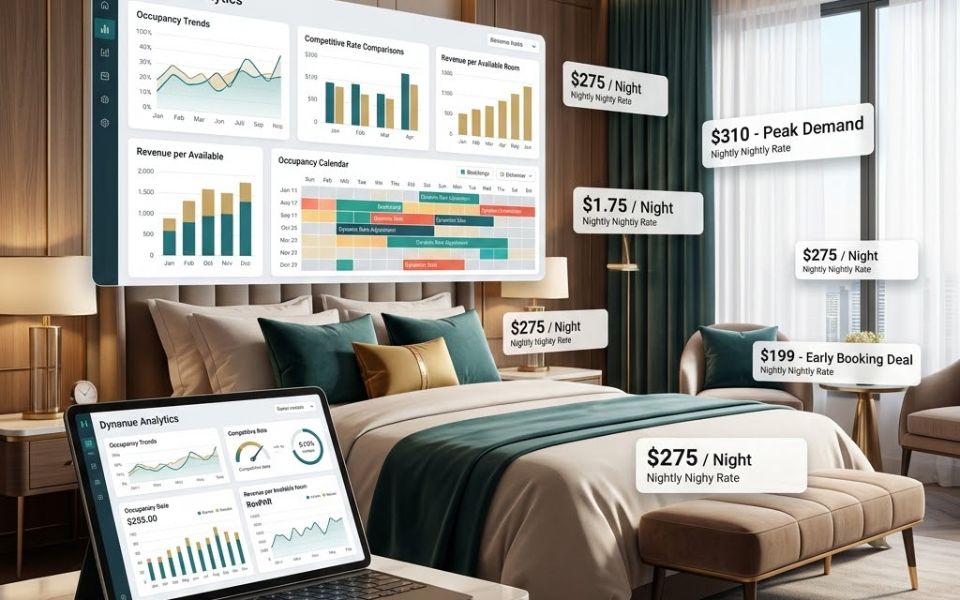
Setting a hotel room price isn't just about setting a specific price. Prices that are too high can discourage potential guests from booking, while prices that are too low can reduce potential profits.
Therefore, it's crucial for hotel, villa, and glamping site owners to understand the right pricing strategy. Good pricing not only helps increase occupancy but also maximizes property revenue.
In the increasingly competitive hospitality industry, pricing strategy is also a crucial part of a hotel's marketing strategy to attract more guests while maintaining business profitability.
Why Is Room Pricing So Important?
Room price is one of the main factors influencing guests' decisions when choosing accommodation. Prospective guests typically compare several properties before making a reservation.
If the room price is not competitive, potential guests can easily choose another property that offers better value. Furthermore, room price also influences:
- Hotel occupancy rate
- Hotel position in the market
- Perception of property quality
- Long-term revenue potential
Therefore, pricing strategies must be well-planned and adapted to market conditions.
Competitor Pricing Analysis
One important step in determining room rates is conducting a competitor analysis. By understanding the prices offered by other hotels in the same area, you can determine the right price position.
Some things to consider when analyzing competitors include:
- Room types offered
- Hotel amenities
- Property location
- Guest reviews and ratings
Hotels with more comprehensive amenities or premium locations can usually set higher prices than their competitors. This analysis is often part of a hotel's marketing strategy to ensure prices remain competitive in the market.
Use a Dynamic Pricing Strategy
Hotel room prices should not be static. In the hospitality industry, many hotels use dynamic pricing, a strategy of adjusting prices based on market demand. Some factors that influence room rates include:
- High season and low season
- Events or festivals at tourist destinations
- Hotel occupancy rates
- Market demand
For example, room rates typically increase during the holiday season or when there are major events at a destination. With a dynamic pricing strategy, hotels can maximize revenue when demand is high and continue to attract guests when demand is low.
Consider Market Segmentation
Each hotel has a different target market. Some hotels target backpackers, while others focus on honeymoon couples or families. Therefore, room prices must be adjusted to the target market segment. For example:
- Budget hotels typically offer more affordable prices.
- Boutique hotels focus on unique experiences at mid-range prices.
- Premium resorts offer exclusive amenities at higher prices.
Understanding market segmentation helps hotels set prices that align with guest expectations.
Optimize Online Sales Channels
Currently, most guests book rooms through online platforms such as OTAs or hotel websites. Therefore, distribution strategies also influence room pricing. Hotels need to ensure competitive prices across various booking channels while maintaining profit margins. Some frequently used strategies include:
- Offering special promotions on the hotel website
- Optimizing direct bookings
- Setting different prices for each distribution channel
For villa, hotel, and glamping site owners, the right digital strategy can significantly improve property sales performance.
ecommerceloka is here as a solution to help optimize villa, hotel, and glamping site sales through digital marketing strategies, distribution channel optimization, and more effective pricing strategy management.
Through the right approach, properties can increase occupancy while maximizing revenue potential.
FAQ
1. What is dynamic pricing in hotels?
Dynamic pricing is a room pricing strategy that flexibly changes based on market demand, the tourist season, or occupancy levels.
2. Why do hotels need to analyze competitor pricing?
Competitor analysis helps hotels understand their market position and thus determine competitive pricing.
3. Do hotel room prices have to remain the same year-round?
No. Many hotels adjust their prices based on the tourist season, specific events, or market demand.
4. How can they increase hotel room sales?
Hotels can use digital marketing strategies, OTA optimization, and direct bookings through their websites.
5. How does ecommerceloka help hotels increase sales?
ecommerceloka helps optimize villa, hotel, and glamping sales through hotel strategies